Treat the elevator as its own system
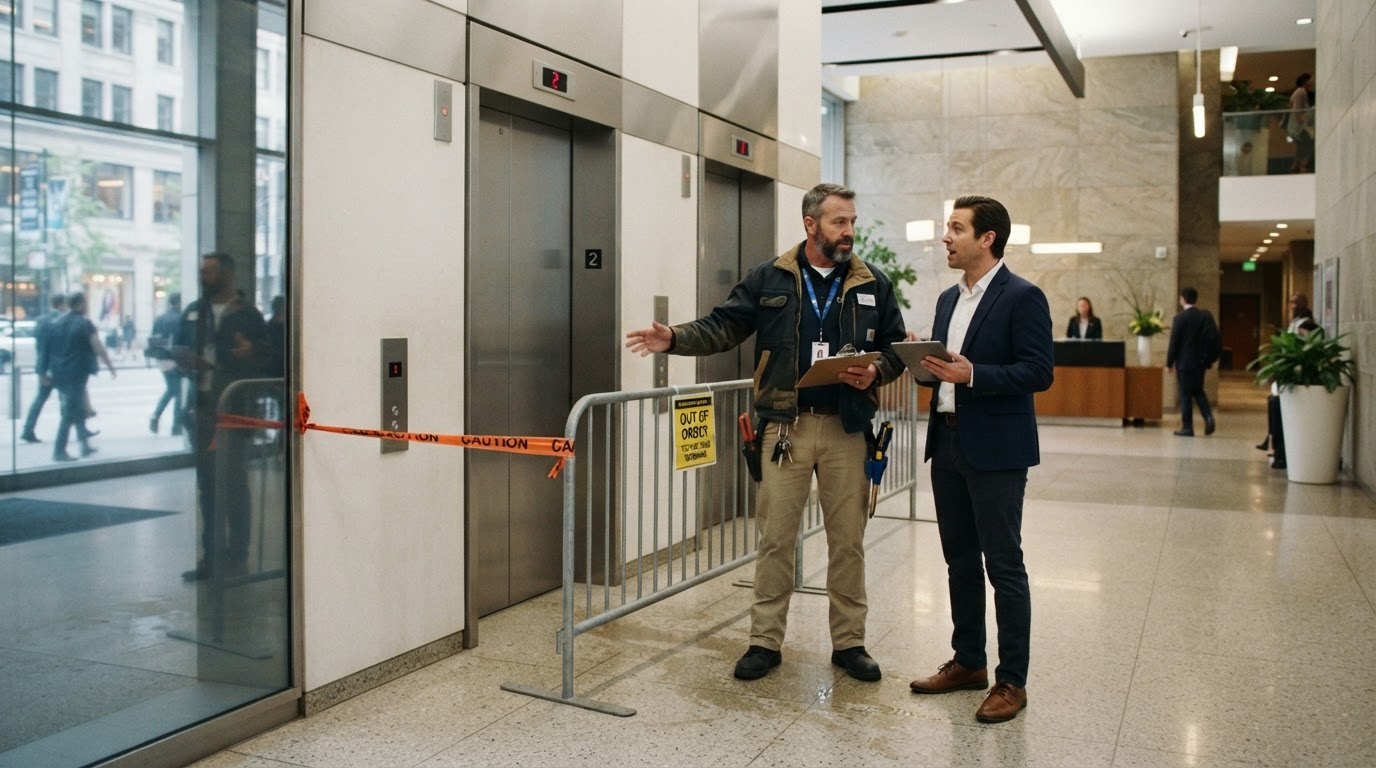
Record where water was observed, when it was discovered and which equipment or levels may have been affected. Do not enter a hoistway, attempt to reset equipment or remove covers. The OSHA electrical-safety resources underscore the need to control electrical hazards; elevator-specific procedures and inspection requirements are governed by the appropriate qualified professionals and jurisdiction. Notify tenants and visitors with a clear, factual message: which entrances or floors are affected, what accessible routes remain and when the next update will be issued. Do not promise a return-to-service time until the responsible provider has assessed the system.Keep reopening decisions separate
A commercial property may need separate decisions for water extraction, electrical service, life-safety systems, elevators and tenant access. Assign each decision to a named owner and record the release criteria. This avoids treating a single contractor’s arrival as proof that every building system can operate normally. For a hypothetical leak from an upper mechanical room, a manager might restore office power while elevator equipment remains under evaluation. The building can communicate the distinction without implying that the property is fully reopened or safe for every use. NDR’s Commercial Property Recovery archive covers related facility coordination. Preserve inspection records and follow the direction of the qualified provider and local authority.Review lease obligations and accessibility needs while the service is interrupted. A tenant may need notice of a changed route, delivery restriction or temporary closure, while the owner or manager must coordinate the building-level decision. Keep communications factual and time-stamped. Do not offer a technical explanation that has not come from the responsible provider.
After service is restored, record the provider’s findings, any repair recommendation and the date of the next required inspection or test. That file can support follow-up maintenance and help management explain why normal operations resumed only after the relevant system was addressed.
When a proposed repair involves structural, electrical, plumbing or fire-safety work, obtain the appropriate qualified review before closing the area.