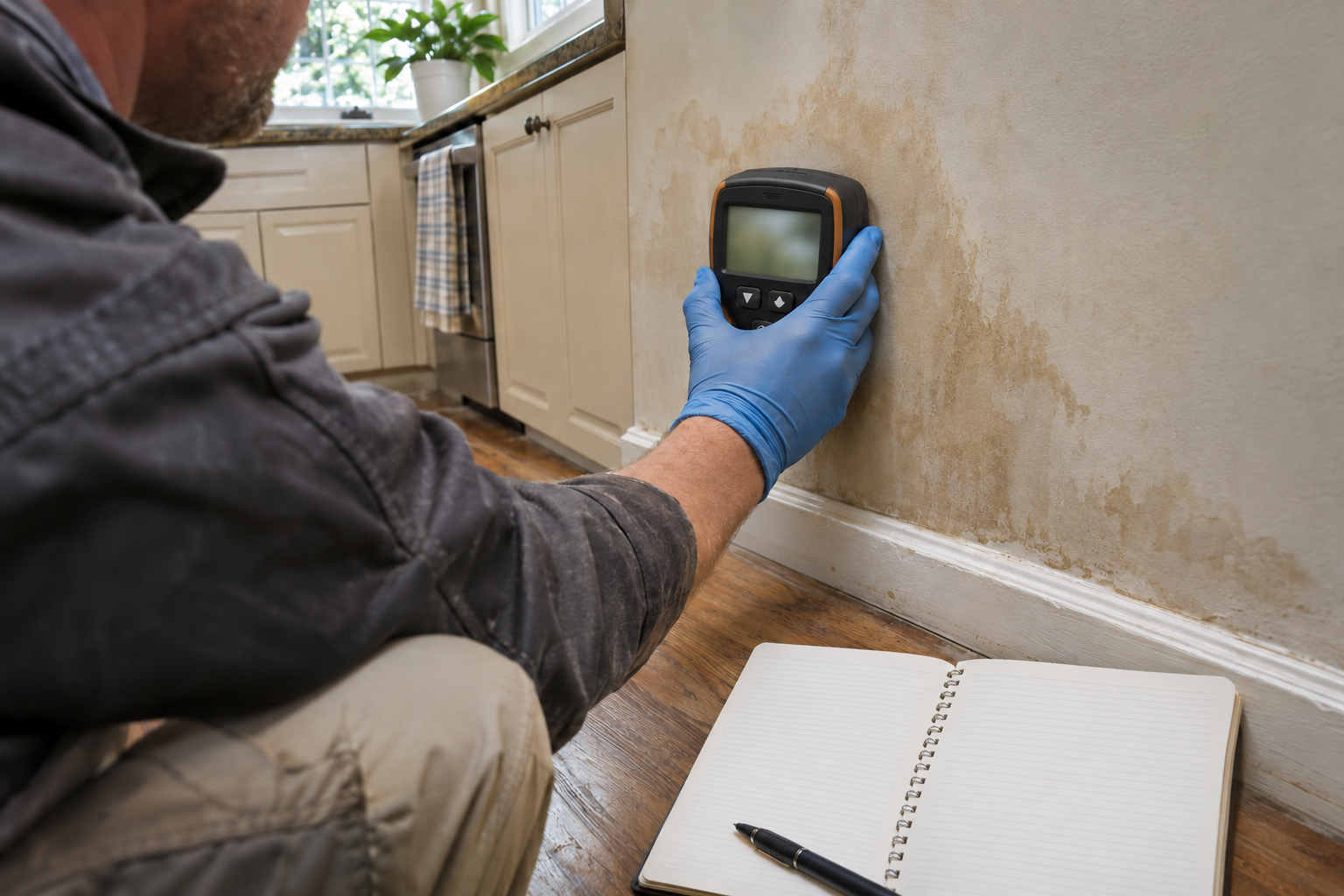
When a leak stops and the floor looks clean, the temptation is to move straight to repairs. Hidden moisture can complicate that decision. A moisture map gives property owners a way to discuss the affected area, the materials being checked and the evidence supporting the next stage of work.
The Environmental Protection Agency’s moisture investigation guidance explains that meters can help locate wet building materials and monitor drying. It also identifies concealed problem areas, including the backs of drywall and spaces beneath carpet. Surface appearance alone cannot describe all those locations.
Begin with the leak history
Give the restoration professional a clear timeline: When was the leak noticed, where did water appear and what was done to stop it? Include earlier stains, recurring odors and repairs nearby. Distinguish what you observed from what you suspect; both are useful when labeled accurately.
Ask for a simple room sketch or photographs with measurement locations marked. The record should identify the material at each point and the date of the visit. A reading without a location is difficult for an owner to connect with a proposed repair.
Ask how readings are interpreted
Massachusetts public health guidance on moisture measuring devices describes challenges in assessing water damage when stains or odors are absent. Meter results need context. Ask which instrument and measurement method were used, and how the professional distinguishes an unusual reading from the material’s normal condition.
Different building materials should not be treated as interchangeable. Request an explanation of the comparison being made and any limits on what the instrument can establish. A high reading is a reason to investigate; the number should not become an unexplained verdict about the entire room.
Track progress and unresolved areas
EPA’s home moisture and mold guide emphasizes correcting the water source and drying affected areas promptly. If the source remains unresolved, a temporary improvement in appearance does not solve the underlying problem. Ask who is responsible for confirming that the leak or moisture pathway has been addressed.
During follow-up visits, have the professional explain what changed at the marked locations and which areas still need attention. Request a clear distinction between accessible surfaces that were measured and enclosed spaces that were not assessed. That makes the documentation more useful when discussing the repair scope.
Consider a kitchen leak that reached the adjacent hallway. An owner might ask whether the inspection followed that path or stopped at the kitchen threshold. The question does not prescribe a particular demolition decision. It asks the professional to explain how the investigation boundaries were chosen and whether the documentation accounts for the water movement described in the initial leak history.
Make the repair decision understandable
Before reconstruction, ask what evidence supports closing the affected assembly and what uncertainties remain. Review how the proposed work relates to structural drying and monitoring. Equipment running in a room is not, by itself, a complete explanation of the decision.
For help identifying local contacts, use NDR’s directory by state and verify relevant experience directly. Keep the moisture record with the job documents so a future contractor can understand what was checked, when and why.
Source notes
Published Nov. 4, 2026. Primary guidance and NDR reference links checked for this article. Original NDR editorial synthesis; illustrative exercises are suggestions, not reports of actual events.