
Before replacing flood-damaged flooring, confirm that cleanup is complete, the supporting materials are sound and the floor is ready for the proposed installation. Choosing a tougher surface cannot correct hidden moisture or an unresolved water-entry problem. Treat replacement as a rebuilding decision, not simply a shopping trip.
Start by separating three questions: What must be removed? What can remain after assessment? What replacement system suits the room’s future exposure? Answering them in order gives your contractor a clearer scope and helps you compare proposals beyond color and price.
Establish what is ready to cover
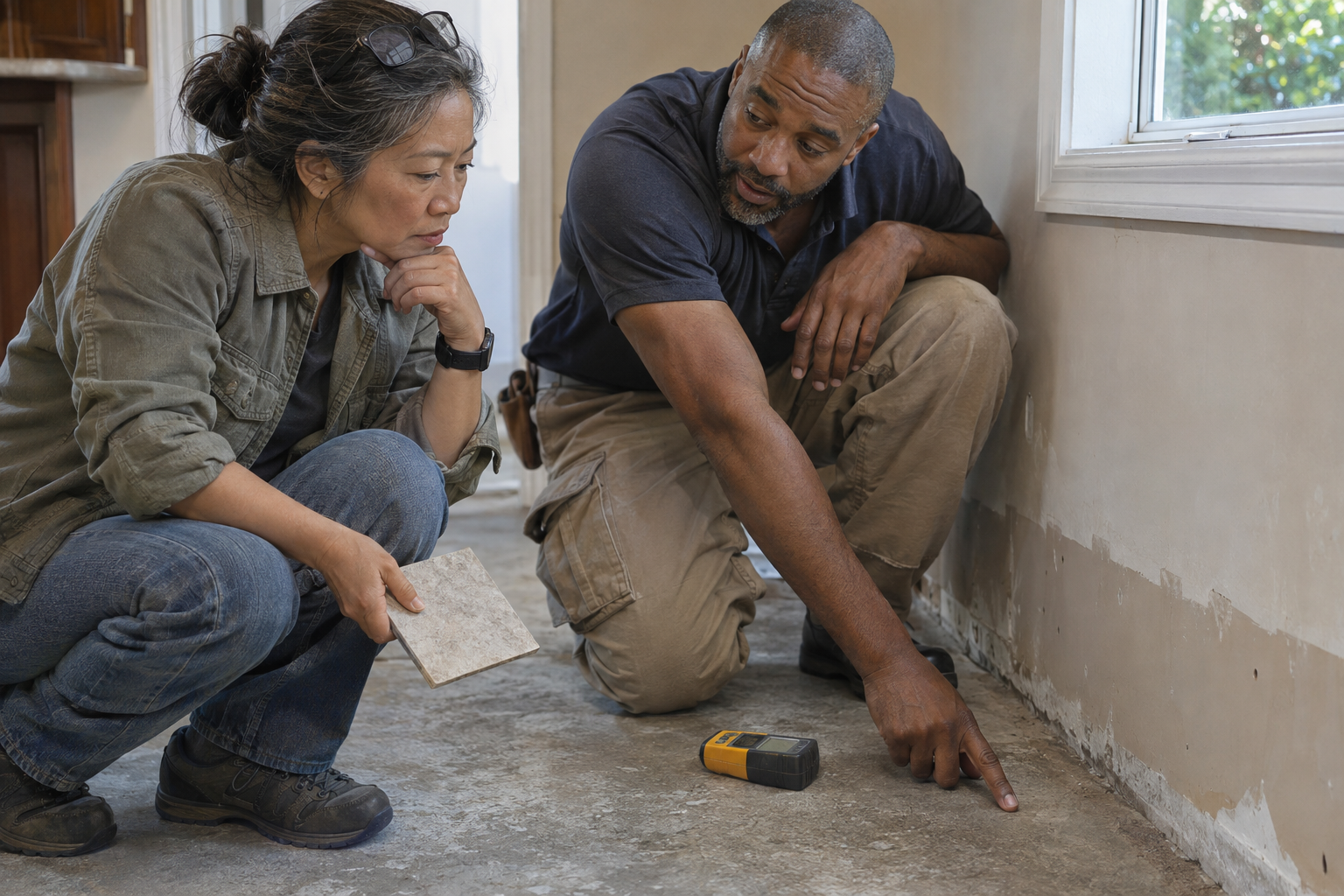
The Environmental Protection Agency advises drying flooded materials completely before sealing them and confirming that a foundation is dry before replacing flooring. Appearance alone is insufficient: ask how the installer will evaluate the substrate, meaning the surface beneath the finished floor, and document readiness.
Request the proposed product’s installation instructions and the testing or preparation those instructions require. Ask who will address damaged supporting materials, uneven surfaces or unresolved moisture. If the assessment finds structural concerns, get qualified help before installation rather than expecting new flooring to conceal the problem.
Older flooring and associated materials may also present asbestos or lead hazards, the EPA notes. Establish whether assessment is needed before anyone disturbs them. A replacement quote should distinguish hazard evaluation and necessary remediation from ordinary removal and installation.
Compare the complete floor system
FEMA’s January 2025 Technical Bulletin 2 evaluates flood damage resistance for materials used under National Flood Insurance Program requirements. It shows why broad labels are inadequate: ceramic and porcelain tile set in mortar receive an acceptable rating, while the same tile with organic adhesives does not.
The bulletin also explains that material combinations matter. A finish and its supporting layers must work together; an assembly that restricts drying can perform poorly even when individual components appear suitable. Ask the contractor to identify the finish, adhesive, underlayment and substrate, rather than naming only the visible product.
For a hypothetical comparison, two proposals might both specify tile but use different bonding materials and different preparation allowances. Ask each bidder to explain the assembly and how it would be inspected, cleaned or repaired following another water event. A matching surface does not establish an equivalent installation.
Choose improvements with the next event in mind
Ask your local building or floodplain office which permits and requirements apply to your repair. FEMA emphasizes that stricter state or local rules can govern. Its material ratings do not make every finished room permissible below a required flood elevation, and they are not a guarantee against damage.
Ask for separate prices for required repairs and optional upgrades. That distinction helps you decide which improvements fit your budget without overlooking essential preparation or assuming that a more expensive finish resolves the underlying flood risk.
Compare options using a written checklist: suitability for the location, preparation requirements, cleanability, repair access and total installed cost. Discuss the water-entry cause separately so a cosmetic improvement does not replace needed prevention work. Use NDR’s hiring guidance to clarify scope and authorization, then request a replacement plan that records the decisions before materials are ordered.