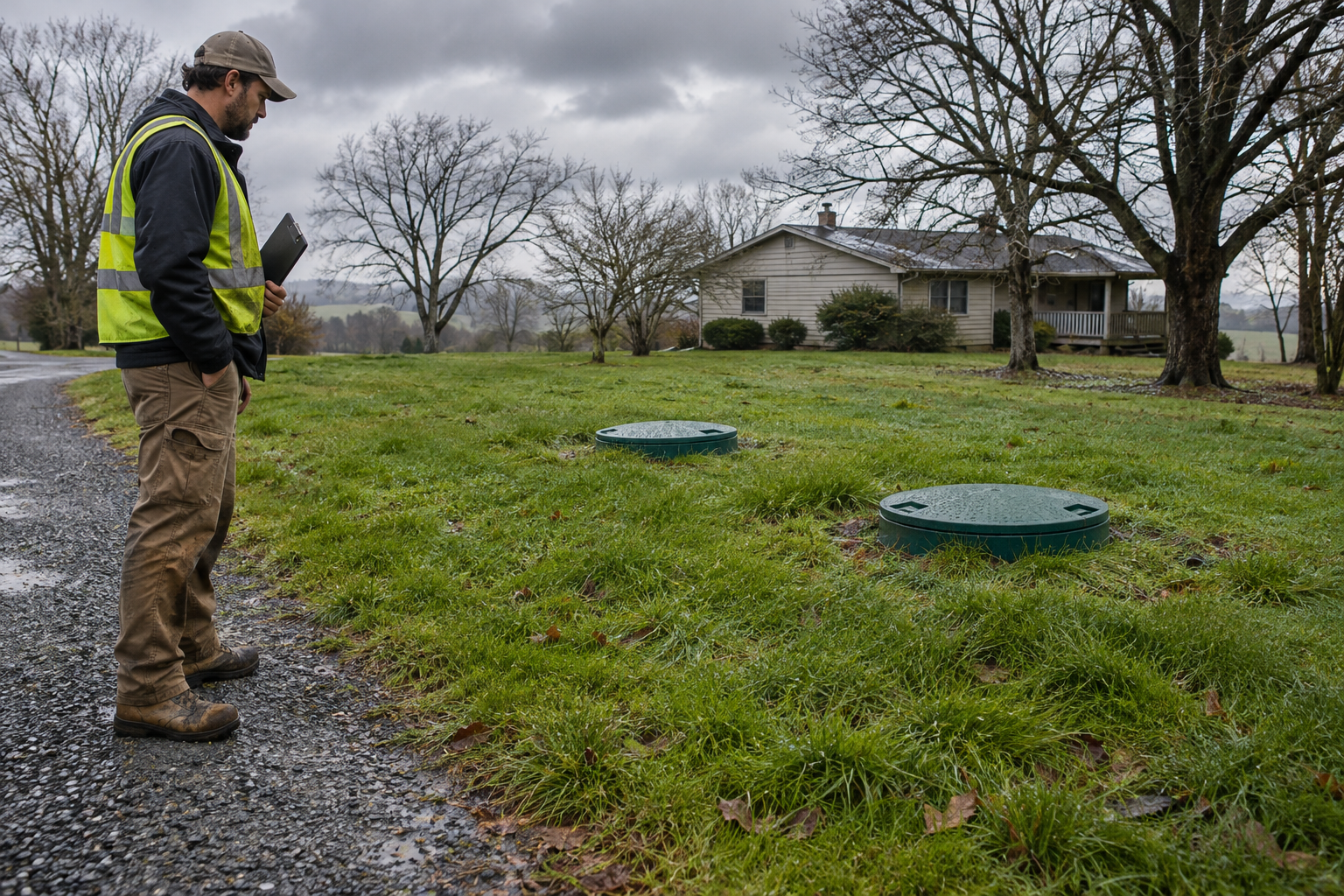
Do not rush to pump a flooded system
If flooding has covered your septic system or left its drainfield saturated, contact the local health department and a qualified septic professional before arranging pumping or normal use. Removing water from the tank too soon can create another repair problem.
The Environmental Protection Agency’s post-flood septic guidance warns against pumping while the drainfield is flooded or saturated. An emptied tank can float, damaging connected pipes. The agency recommends reducing water use and seeking local advice about the system’s condition.
That means a retreating waterline is not, by itself, permission to resume the household’s usual laundry, showers and other wastewater flows. Ask what conditions must change before a professional can assess the tank, drainfield and associated equipment.
Give the professional a useful history
From a safe location, record when flooding reached the property, how long it remained and any known damage or unusual wastewater behavior. Locate existing system drawings and maintenance records. These details can help the professional plan an assessment without requiring you to open a tank or disturb equipment.
Keep the conversation specific. Ask whether the drainfield remains saturated, which components need inspection and who will evaluate any electrical equipment. Request a written explanation of the proposed work and the conditions that must be met before it proceeds. Do not confuse a pumping appointment with a complete system evaluation.
Consider a hypothetical household that returns after several days away. The lawn looks mostly dry, but the family does not know how long the drainfield was submerged. The useful next step is to report that uncertainty and obtain local guidance, rather than schedule pumping simply because a truck is available.
The EPA cautions that septic tanks can contain dangerous gases and says cleaning and repair should be performed by trained specialists. Do not enter a tank or improvise an inspection through an opening. Keep children and other household members away from damaged components.
Protect the recovery area
Tell cleanup and repair contractors where the septic system and drainfield are located. The EPA advises avoiding equipment traffic that can compact the drainfield. Include this area in the site plan before heavy deliveries, debris handling or other restoration activity begins.
If a contractor proposes access across the drainfield, ask for a different route or obtain advice from the septic professional. Marking an area on a project sketch can prevent different crews from making independent assumptions about where vehicles may travel. Share that sketch with the person coordinating the overall recovery.
Separate the immediate service decision from longer-term repair proposals. If replacement or major work is recommended, ask what finding supports it and what approvals are needed. Keep photographs, inspection notes and estimates together so the next professional can understand the assessment already performed.
Before returning to normal use, ask the appropriate local authority and service professional what remains unresolved, how to monitor the system and whom to contact if problems recur. Save the findings with repair records. NDR’s flood recovery coverage can help organize related property decisions, but a national guide cannot replace an assessment of your particular system and ground conditions.