Plan the separation before work starts
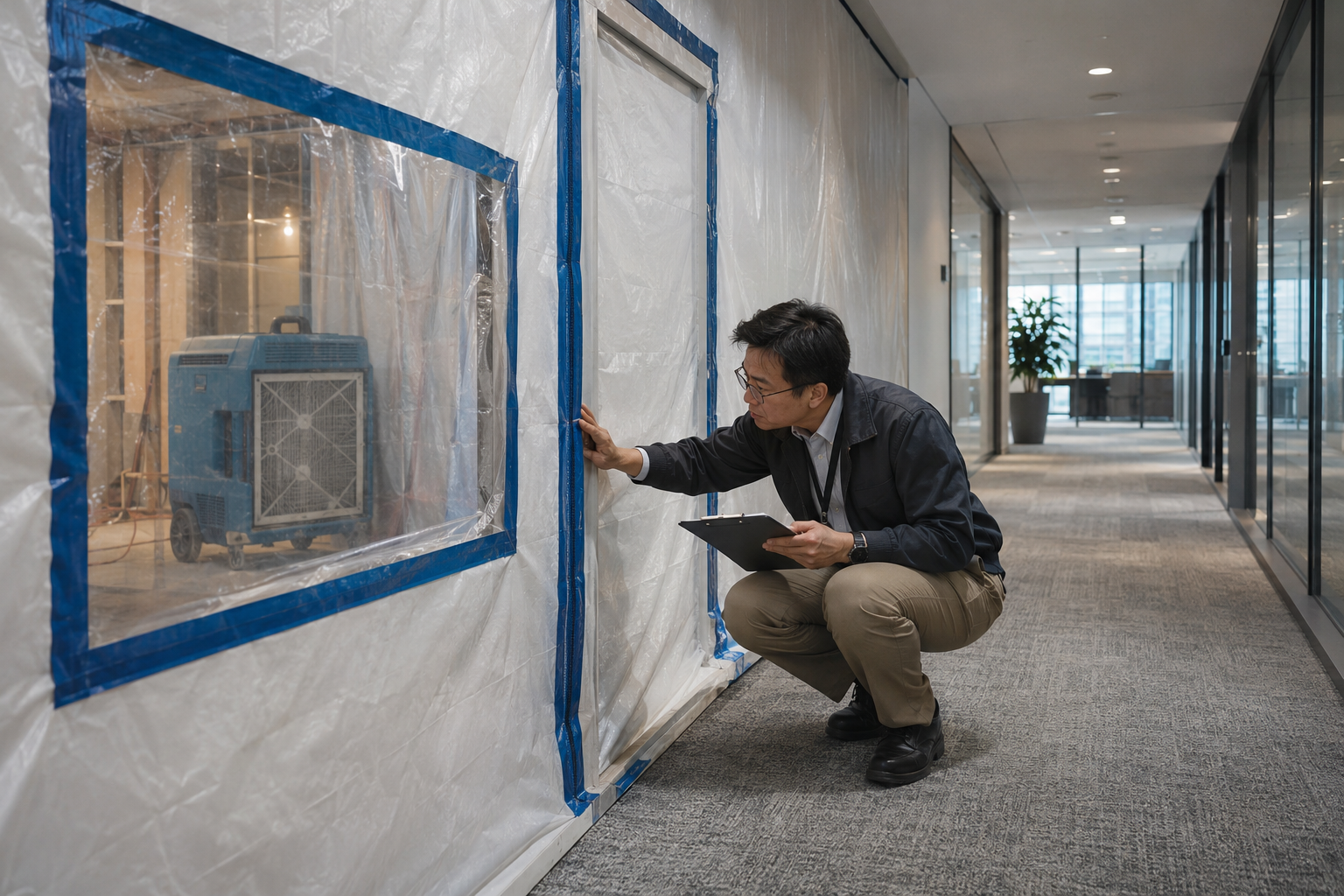
When commercial repairs occur beside occupied space, coordinate dust control, air movement and occupant communication before work begins. A temporary partition is part of that plan, not proof that the surrounding workplace can operate without further assessment.
In January 2020 guidance on occupied building renovations, the National Institute for Occupational Safety and Health describes problems involving dust control, building materials and communication. Its recommendations include maintaining barriers, controlling airflow and using suitable cleanup methods. This is standing guidance, not a new finding about your property.
Ask the project team which activities could release contaminants, how occupied areas will be separated and how ventilation changes will be managed. Qualified professionals should determine the controls appropriate to the work and building.
Assign inspection and communication
Consider a hypothetical office where repairs move from one room to the next. A barrier that worked for the first phase may no longer match the work area. The manager should arrange a review before the crew changes locations, rather than assume yesterday’s setup remains adequate.
Identify who checks barriers and controls, who receives occupant concerns and who can stop or change work when a problem appears. Agree on how deliveries and cleanup will occur without carrying debris through occupied areas unnecessarily. Keep access and emergency arrangements coordinated with the overall project.
Tell occupants what work is planned, which areas are restricted and how to report dust, odors or other concerns. Avoid promising that an area is risk-free. A clear reporting route lets the team assess a concern instead of letting informal assurances substitute for a response.
Review before changing phases
Ask for the cleanup and verification steps required before reopening a work area. Suspected asbestos, lead or other hazardous materials require appropriate professional assessment; routine construction dust control is not a substitute for specialized requirements.
Keep a dated phase plan so incoming contractors can see where work may occur and which occupied areas require protection before tools and materials are moved.
Connect the plan with NDR’s commercial recovery coverage and document the next handoff. Record unresolved conditions and obtain the relevant qualified assessments and authorizations before treating the space as ready for normal use.