Plan a trip your household can complete
A pet evacuation plan should work from the moment someone opens the carrier until the household reaches a place that will accept the animal. Buying supplies is useful, but practicing that trip reveals problems a shopping list cannot.
The Centers for Disease Control and Prevention recommends planning shelter, transport and emergency supplies for pets before disaster strikes. Its guidance also calls for practicing evacuation with the entire household. Use that rehearsal to assign responsibilities and find gaps while changes are still easy.
Confirm the destination directly. Ask a hotel, boarding facility, relative or local emergency management office about the animals they can accommodate and any required records. CDC notes that pets may not be allowed in local shelters, with a distinct exception for service animals. Do not assume a household pet has the same access rules.
Rehearse the difficult parts
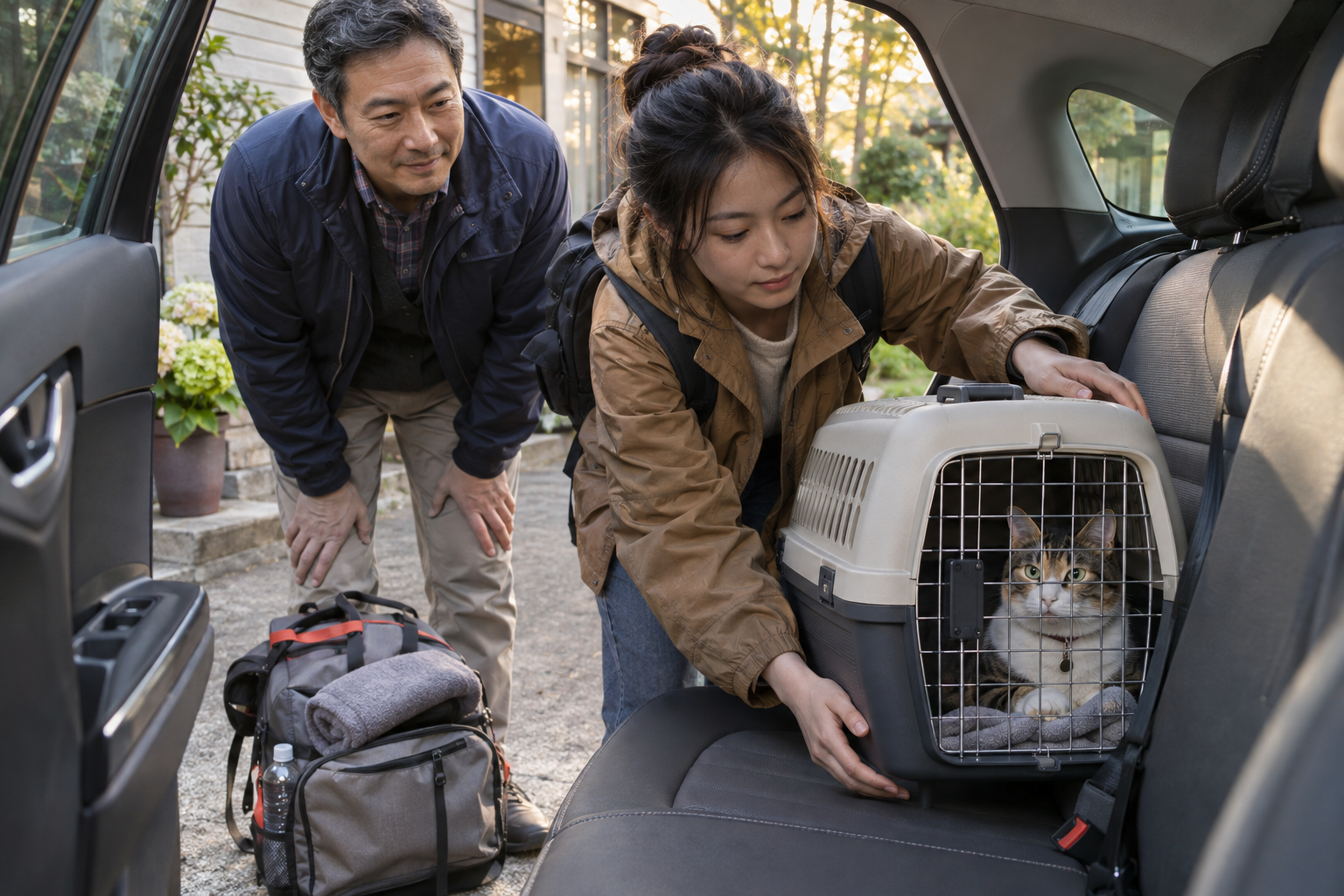
Keep suitable carriers or leashes accessible, then practice moving pets into them calmly. CDC recommends making the carrier comfortable and practicing transport. Ask a veterinarian for guidance if an animal’s health, behavior or medication needs complicate travel. Do not experiment with sedatives during an emergency.
Try the planned vehicle arrangement before packing everything else. Account for people, mobility aids, animal carriers and supplies without blocking the driver’s view or leaving an animal loose. If the household has no vehicle, arrange transportation with trusted people and ask local officials about disaster transport options.
Create a backup caregiver arrangement for times when nobody is home. CDC recommends a trusted neighbor who can check on and, if necessary, evacuate animals. Agree on safe access, contact methods and the destination. A name on a list is not a working arrangement until that person knows the plan.
Connect identification, records and supplies
Check identification tags and the contact details registered with a microchip company. Keep veterinary records and medication information accessible for travel. CDC advises owners to ask their veterinarian for help assembling those records. Put a copy with the pet supplies rather than relying on a document stored only inside the home.
Consider a hypothetical household with two cats and one carrier. Its destination may accept both animals, yet the loading rehearsal immediately exposes a transport gap. Another household may have adequate carriers but discover that only one person knows where a frightened pet hides. Each finding produces a specific task before the next practice.
Integrate the pet plan with the household’s communication arrangements. Record who retrieves the animals, who carries their supplies and who notifies the backup caregiver. Keep the instructions short enough for someone else to follow without searching through several messages.
Include the backup caregiver in a practice conversation. Confirm how they would learn that evacuation is needed, where supplies are stored and how the household would confirm the animals arrived. Update access arrangements whenever keys or contacts change.
NDR’s Planning coverage offers related household preparedness guidance. Today, confirm one destination and rehearse loading your pet with the equipment you intend to use. Update the plan after the practice, and review it when pets, caregivers, vehicles or household needs change.