Dry floors do not establish readiness
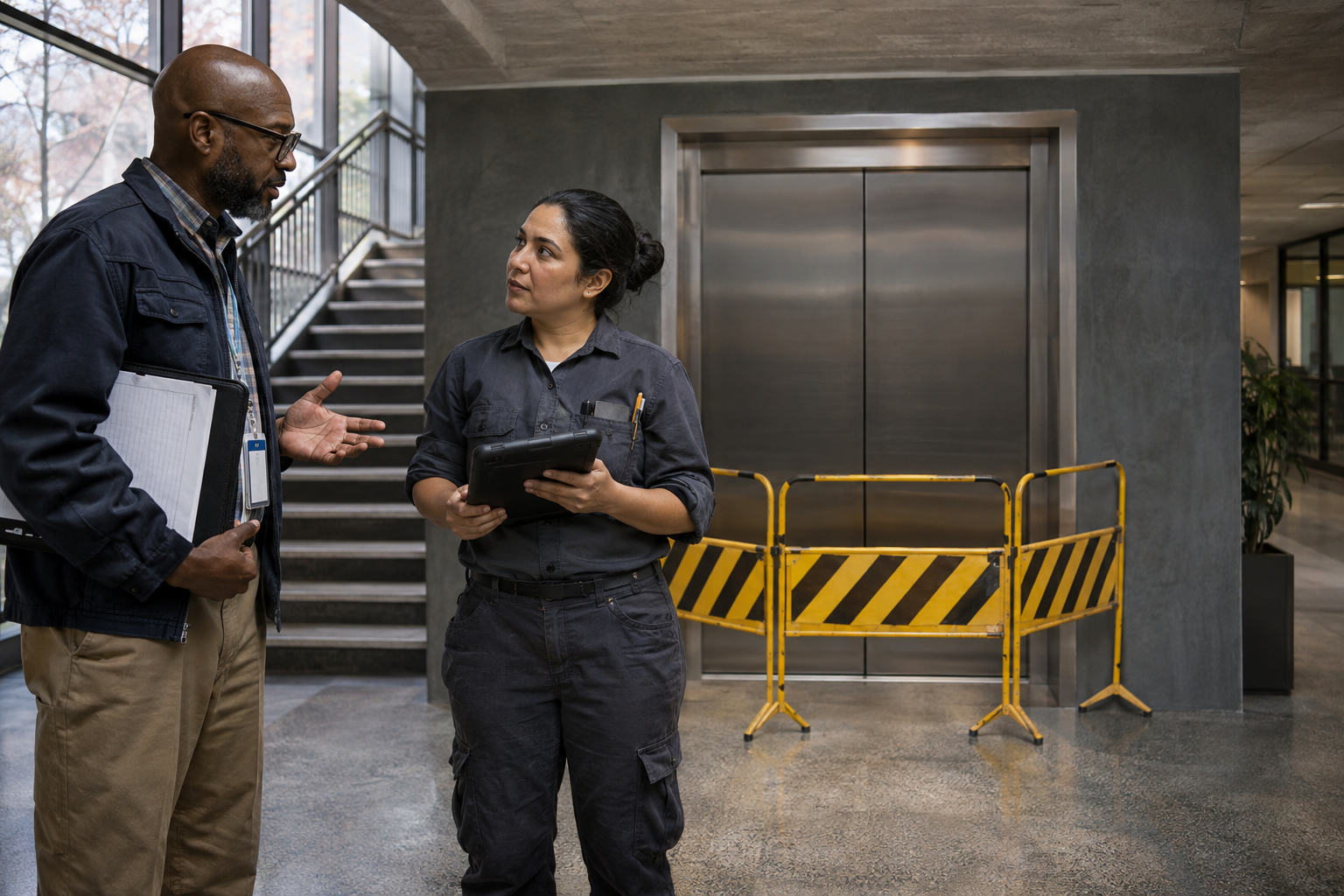
An elevator affected by flooding should not return to passenger service simply because the lobby floor has dried. Keep the equipment unavailable and coordinate evaluation with the elevator service provider and building management.
Otis warns that flooding can affect elevator electrical and mechanical systems and advises waiting for inspection and clearance by trained technicians and management before use. Schindler likewise calls for a thorough service-provider inspection when water is found in relevant equipment areas. These are manufacturer safety instructions, not a universal permit procedure.
Coordinate access without improvising repairs
Give the service provider a factual account of what was observed, when water entered and which areas may be affected. Share available photographs taken from safe locations. Do not enter a pit, shaft or restricted machine space to complete the report, and do not reset controls to test whether the elevator will move.
Ask who will manage the outage, communicate with occupants and coordinate any inspection or authorization required by the local authority. Identify temporary access needs early. A plan that simply tells everyone to use stairs may not address the needs of occupants who cannot do so.
Consider a hypothetical office where cleanup finishes before the elevator technician can inspect the equipment. General repair completion and elevator availability are separate milestones. Scheduling deliveries or tenant returns around an assumed restart can create avoidable access problems.
Document the release decision
Ask for the service findings, required follow-up and the identity of the person authorizing return to service under applicable procedures. Keep the equipment status consistent across building notices, reception staff and contractors. A repair invoice alone should not be interpreted as clearance unless it actually records that decision.
Confirm accessibility and operational arrangements with the responsible building team and relevant authorities. This article cannot establish that a particular elevator or building is safe or legally ready to reopen.
Include reception and security in the status update. They may be the first people asked whether the elevator works, even when contractors know otherwise.
NDR’s Commercial Property Recovery archive covers related coordination needs. Before setting the return date, obtain the qualified assessment and required authorization, then communicate the confirmed status to occupants.