Turn drainage observations into assignments
A commercial roof drainage inspection should produce a record of conditions, needed corrections and responsibility for follow-up. A statement that the roof was checked is less useful than knowing which drain, scupper or gutter was assessed and what the inspector found.
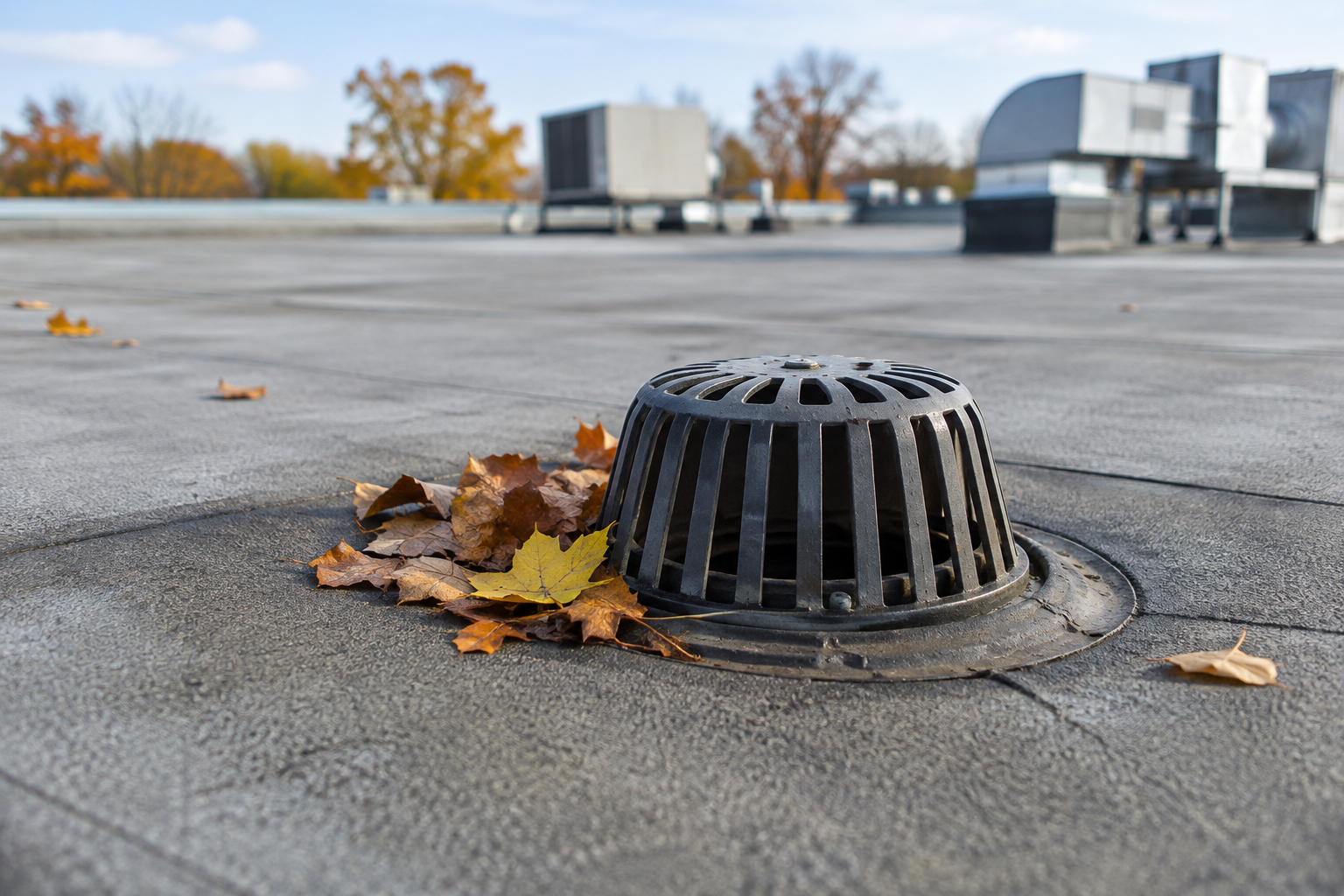
Carlisle SynTec Systems’ September 2026 guidance highlights fall accumulations of leaves and debris around drainage components. It explains that blocked drainage can leave water where the roof was designed to shed it. The manufacturer’s discussion supports maintenance planning; it is not a diagnosis of any particular roof.
Connect the roof to the repair file
Arrange appropriate professional access and inspection for the installed roof system. Do not send an untrained employee onto a roof simply to photograph a suspected blockage. Ask the roofing provider to coordinate access, conditions and applicable safety requirements before the visit.
Provide roof plans, previous leak reports and known repair history. Ask for photographs tied to specific locations and a distinction between observed debris, damaged components and concerns requiring further evaluation. A maintenance record should avoid turning an unconfirmed explanation into an established cause.
Consider a hypothetical warehouse with repeated staining near the same interior area. Clearing leaves may be necessary, but the manager should ask whether the drainage observation explains the reported problem or whether additional investigation remains. Keep the interior symptom and roof findings connected in the work order. Record who received the report so a finding does not remain in someone’s inbox.
Close the follow-up loop
Identify which tasks were completed during the visit and which require authorization, materials or another trade. Ask the provider to describe the proposed correction and any applicable manufacturer requirements. Avoid assuming a maintenance visit automatically includes every repair noted in the report.
Assign a contact and review date for outstanding items. Retain before-and-after photographs where available, the service record and the next recommended inspection. Share relevant findings with other contractors whose rooftop work could affect the same area.
NDR’s Commercial Property Recovery guides cover related repair decisions. Use the inspection to build an actionable record: location, condition, assigned response and verification. That gives the property team a clearer basis for maintenance decisions before another leak disrupts operations.