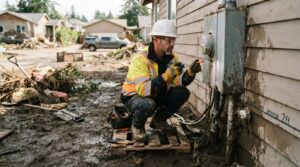
Do not use appearance as the test
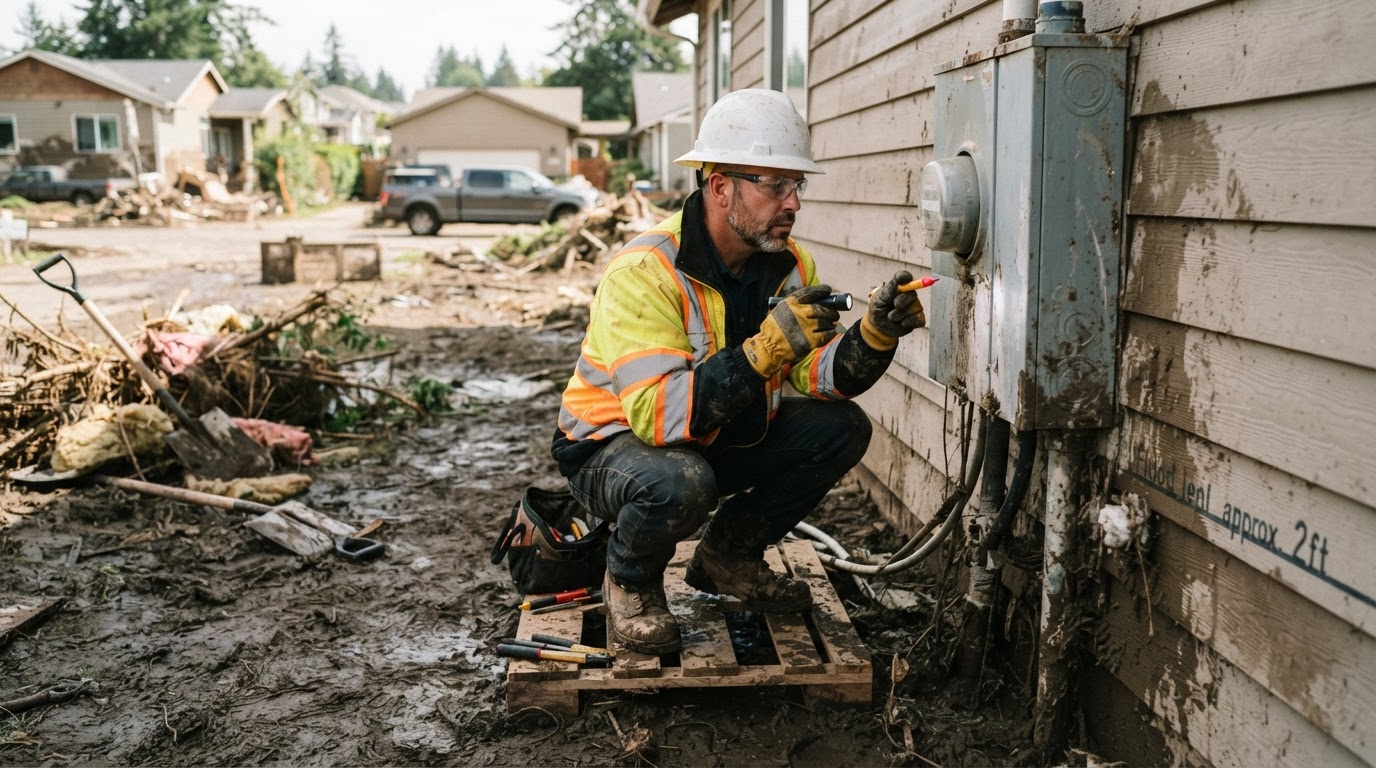
The U.S. Consumer Product Safety Commission’s flood-safety guidance warns that electrical equipment exposed to floodwater may need replacement or professional evaluation before use. Requirements and utility procedures vary by location and equipment, so the document is not a substitute for the authority having jurisdiction or a licensed electrician. Photograph the water line and the equipment from a safe position. Record whether the water was still present when power was shut off, but do not open a panel cover or move damaged service equipment. If a utility disconnect is involved, ask the utility and electrician which party must complete each step before power can be restored.Coordinate the recovery sequence
A restoration crew may need power for drying equipment, but temporary power decisions require their own safety planning. Do not run equipment through damaged outlets or use portable generation in enclosed or partially enclosed areas. Electrical work, drying, demolition and cleaning should be sequenced so one activity does not hide the condition another professional must inspect. For a hypothetical basement flood, a wall can appear dry while the panel and branch circuits need separate evaluation. Removing wet finishes before the electrical condition is resolved may also create access and documentation issues. The right order depends on the building, water exposure and local requirements. Put inspection findings, photos and utility notices in the recovery file. NDR’s Flood Damage archive covers related safe-recovery questions. Restore use only when the appropriate professionals and authorities have cleared the necessary work.Keep floodwater away from generators and portable electrical equipment. Carbon monoxide and electrical hazards can remain after water recedes, especially when ventilation or wiring has been affected. If power is needed for recovery work, use only equipment and connections selected and installed for the conditions by qualified people. Never assume a temporary arrangement is safe because it worked briefly.
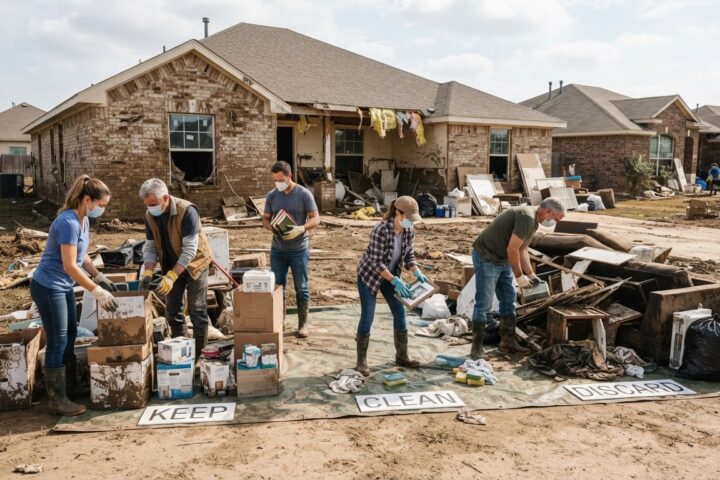
Before cleanup resumes, confirm the plan for waste, contaminated materials and any building components that require specialized handling. Local health and building officials can impose requirements beyond general federal guidance. A careful sequence protects people and preserves the information needed for repair decisions and claim documentation.
Keep emergency contact numbers available, but use 911 or the locally designated emergency number whenever an immediate life-safety threat exists.
Take extra care around detached garages, basements and outbuildings where floodwater may have contacted extension cords, appliances, chargers or stored tools. These items may need professional assessment, cleaning or disposal according to the conditions and manufacturer guidance. Do not move heavy equipment through wet areas or reconnect it to power simply to test whether it still works.
When documenting the incident, use dates and observations rather than conclusions: water visible at the panel location, power disconnected by the utility, electrician scheduled for inspection. This makes the record more useful to the professionals and insurers who must assess the equipment.