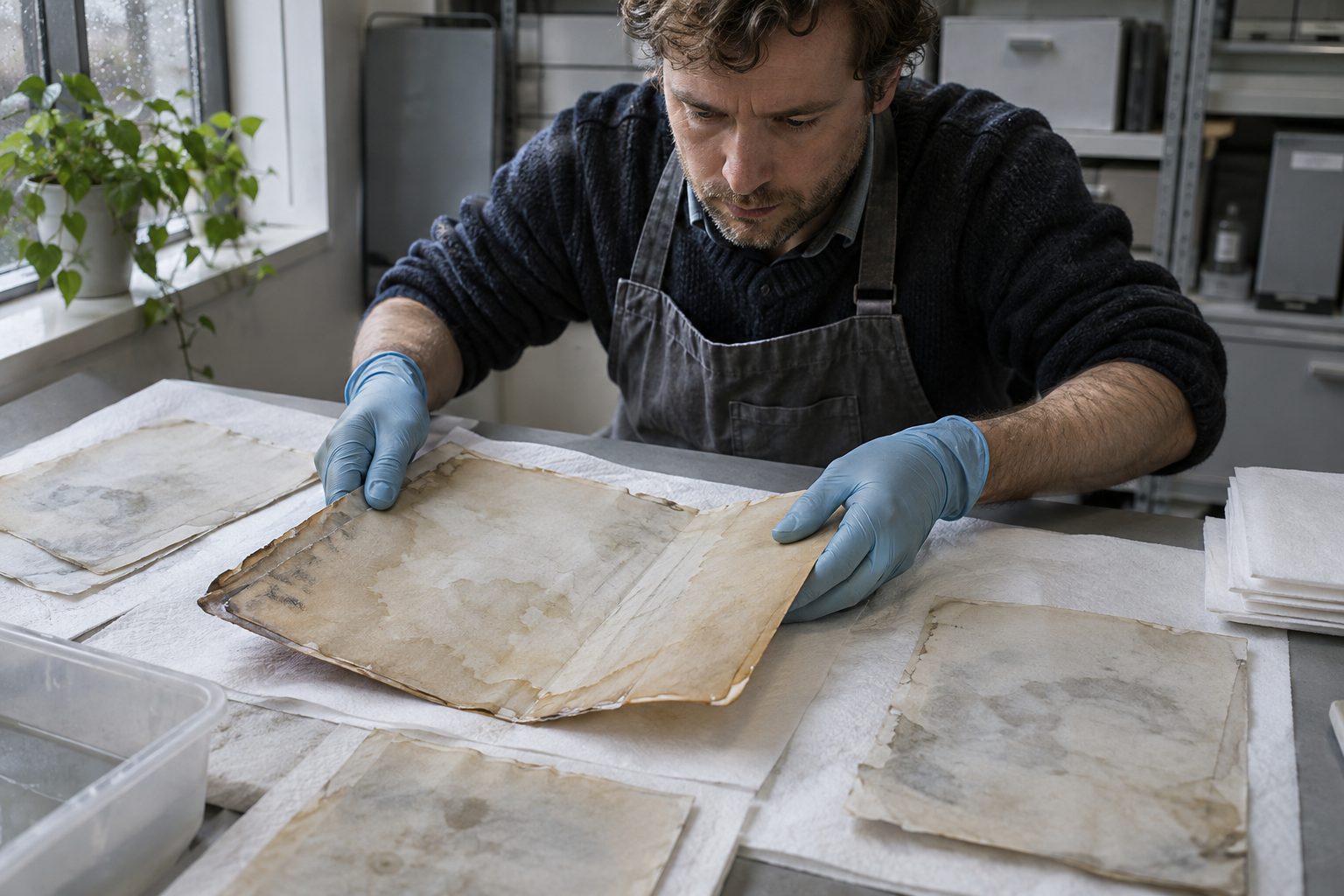
Decide what can be handled promptly
Wet business records need a triage decision before staff spread every folder across available desks. Assess safe access, the amount of material, its importance and whether appropriate drying space and preservation support are available.
The National Archives says small quantities of many paper records can be air-dried on clean absorbent material in a cool, dry location with good air circulation. It cautions against high heat and harsh sunlight, which can permanently damage records. This is preservation guidance, not clearance to handle contaminated material.
Protect the information and the material
Keep confidential files in a controlled location throughout recovery. Identify who can handle them, how locations will be tracked and which records have usable digital copies. A photographed inventory of boxes can aid coordination without exposing individual pages to unnecessary viewers.
For quantities too large to handle within 48 hours, the National Archives discusses freezing for later drying or referral to a commercial drying or preservation professional. It also identifies exceptions, including some photographs and other materials. Do not treat a general freezing recommendation as suitable for every collection.
A hypothetical office with several damp invoice folders faces a different problem from a storage room holding mixed photographs, bound volumes and unique legal records. The first may have a manageable paper-drying task; the second needs specialist triage before well-intended handling creates additional damage.
Assign a recovery owner
Choose one coordinator to connect records staff, facilities personnel, preservation professionals and appropriate legal or compliance advisers. Confirm retention requirements before disposal. The need to reopen an office does not by itself authorize destroying records or transferring confidential files to an unapproved vendor.
Record what was moved, who received it and what treatment is proposed. Ask specialists about material limitations and realistic priorities rather than demanding that every document emerge unchanged.
If a specialist takes custody, document the box identifiers and agreed destination. Keep an authorized contact available to answer priority questions without requiring repeated access to the contents.
NDR’s Commercial Property Recovery coverage addresses related repair coordination. Begin with a secure inventory and a professional consultation for valuable, contaminated or complex material. Preserve the information without making its recovery another source of exposure.