Separate source control from drying
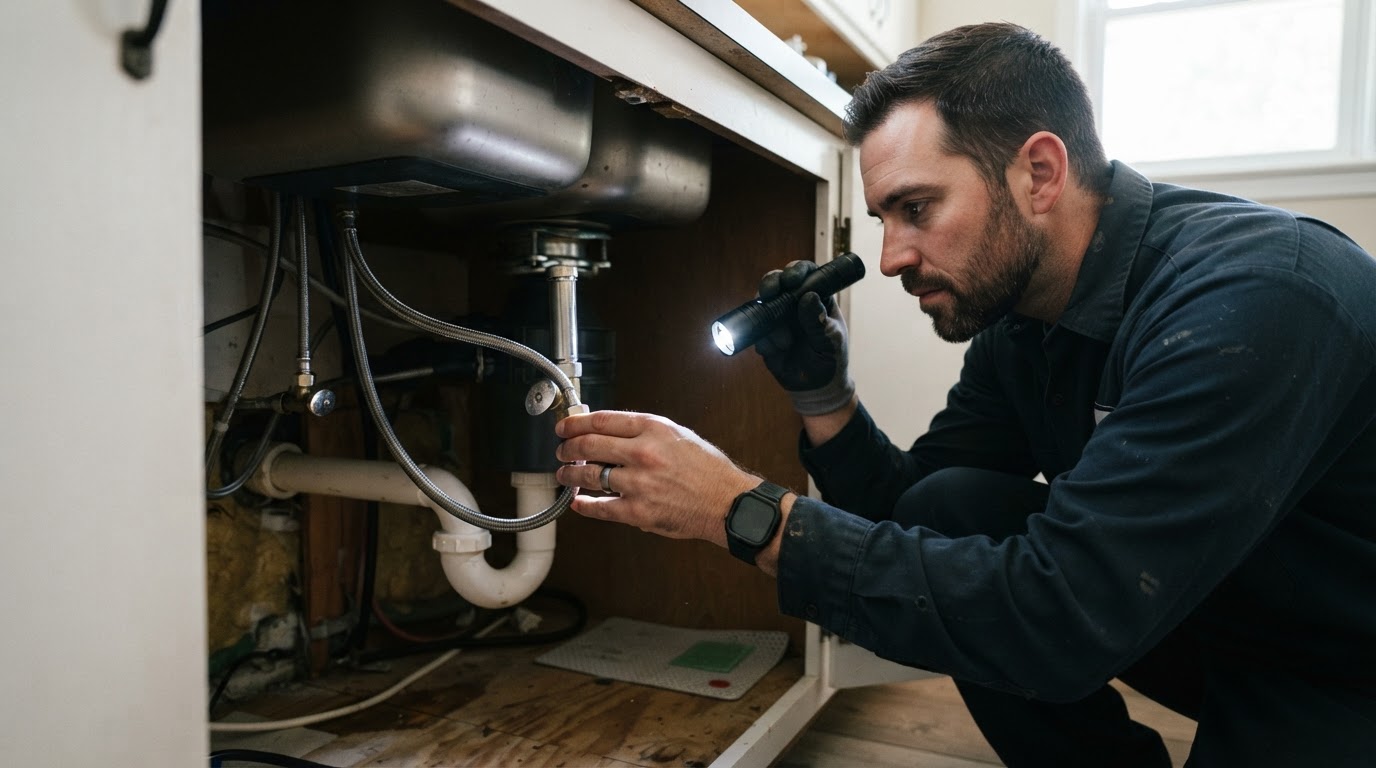
If water is still flowing, use the fixture shutoff or the building’s main shutoff only if it is safe to do so, then contact a qualified plumber. Avoid electrical hazards and do not open finishes that may contain other hazards. The EPA’s moisture and mold guide emphasizes controlling moisture promptly; it does not replace an inspection of hidden building materials. Before replacing the toe kick or cabinet base, photograph the connection, the affected area and any visible staining. Ask the plumber to describe the observed source separately from the repair invoice. A corroded valve, loose fitting and failed supply tube can lead to different questions about scope and insurance, so record observations without assuming cause or coverage.Check the moisture path
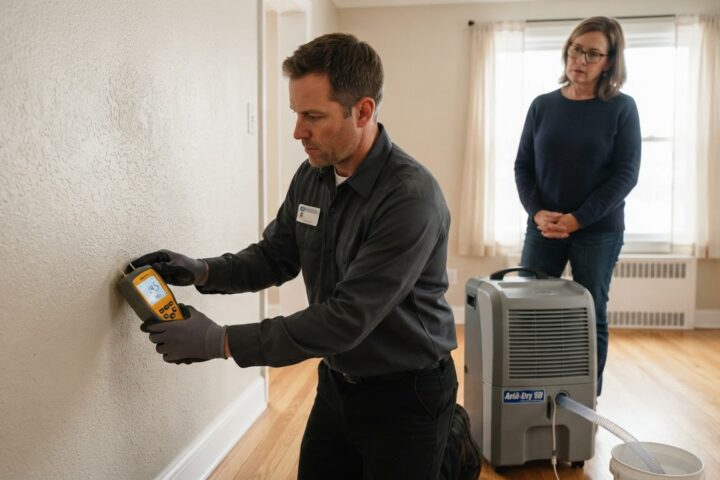
Water can follow gravity, seams and gaps around plumbing penetrations. Look below the cabinet and on the opposite side of the wall, but do not rely on touch alone. A qualified restoration or building professional may use moisture measurements and targeted access to evaluate materials that cannot be seen. The right scope depends on material type, duration, contamination and actual conditions. For a hypothetical second-floor kitchen leak, a cabinet base may feel dry while water has traveled along the pipe opening into a ceiling below. That does not prove every concealed material must be removed; it shows why the assessment should include the spaces connected to the leak path. Keep repair, drying and replacement decisions in one file with photos and dates. NDR’s Water Damage archive explains related moisture decisions. Close the cabinet only after the source, affected materials and any required repairs have been evaluated.Do not restart ordinary use just because the drip has stopped. Run water only after the repair professional says the connection is ready, and observe the accessible area for recurrence. Keep children and pets away from open cabinets, tools and drying equipment. If flooring, insulation or finishes were affected, ask what will be inspected and how findings will be documented before permanent repairs hide the evidence.
For an insurance claim, report the loss promptly and follow the insurer’s instructions. Emergency steps may be necessary, but policy terms and local conditions affect what documentation and inspection are needed. The goal is a clear record of source control, assessment and repair—not a conclusion drawn from a cabinet surface alone.
If conditions change after the first assessment, update the record and ask the appropriate professional whether the repair plan should change before concealed work proceeds.
Ask the person evaluating the loss to explain the scope in plain language: which materials were checked, which readings or observations support the decision, and what would trigger another review. Written notes do not guarantee an outcome, but they make it easier to coordinate the plumber, insurer and repair contractor. Keep the work area accessible until the agreed inspection steps are finished.